
Best Bike Helmets UK 2026: Top Picks for Road, Commute & MTB
I’ve been fitting helmets and treating crash aftermath for 30 years in Bournemouth. Here’s what I tell every customer: a £30 helmet meets the legal standard. A £60 helmet with MIPS may stop a rotational injury that changes your life. That gap in protection is enormous — and the price difference is smaller than most people think.
The best bike helmets UK 2026 now offer genuine rotational impact protection at every price point. MIPS, KinetiCore, WaveCel — technology that used to cost £150+ is now in helmets under £60. Whether you’re commuting through city traffic, grinding gravel lanes, or chasing trails at the weekend, there’s a properly protective helmet here. These are the ones I’d actually put my name to.
Our Top Picks — Best Bike Helmets UK 2026
- Best Overall: Giro Register MIPS — 25 vents, MIPS liner, superb value (~£55)
- Best Budget: Bell Spark 2 — solid EN1078, Float Fit comfort, under £35
- Best Commuter: Specialized Align II MIPS — MIPS + excellent airflow (~£65)
- Best Road: Lazer Tempo KinetiCore — Belgian engineering, integrated protection (~£80)
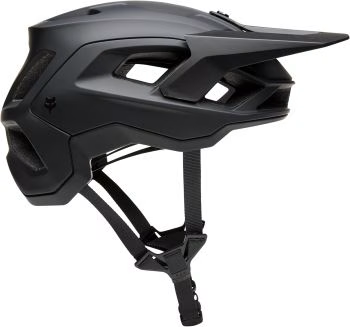
- Best MTB: Fox Speedframe MIPS — trail-ready visor, goggle-compatible (~£90)
Table Of Contents
Why Your Helmet Choice Really Matters
- Rotational injuries are the biggest risk — most serious cycling head injuries come from rotational (angular) force, not direct impact. Standard EN1078 doesn’t test for this. MIPS and KinetiCore do.
- UK law requires a helmet in some cases — while not legally mandatory for adults, many cycling organisations, insurers, and employers require them. Children on public roads are strongly advised to wear one.
- EN1078 is the minimum standard — not the whole story — every helmet sold legally in the UK must carry EN1078 certification, which tests direct impact. It does not test rotational force. For a fuller picture, look up the Virginia Tech Helmet Ratings (helmet.beam.vt.edu) — an independent star-rating system that tests both impact types and is the closest thing to a real-world safety benchmark available.
- Fit matters more than price — a £100 helmet that doesn’t fit protects you less than a £40 one that does. Always adjust the retention dial and check the two-finger rule under your chin.
- Replace after any significant impact — the EPS foam inside compresses on impact and won’t protect you a second time, even if the shell looks fine.
- Vents aren’t just comfort — good airflow keeps you alert on long rides. A hot head = poorer concentration = higher crash risk.
UNDER £40
Entry Level
– EN1078 certified
– Basic EPS liner
– No rotational tech
– Fine for short, low-risk rides
£40 – £70
Sweet Spot
– MIPS or KinetiCore
– 18–25 vents
– Dial-fit retention
– Best value zone
£70 – £120
Performance
– Advanced rotational tech
– Aerodynamic shaping
– Lighter shells
– Sport-specific designs
£120+
Premium
– Integrated MIPS systems
– Carbon/lightweight shells
– Aero road or full-face
– Pro-level protection
Out OurBest Bike Helmets UK 2026
1. Giro Register MIPS — Best Overall
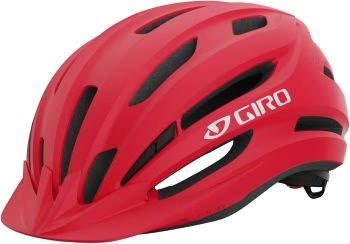
The Giro Register MIPS is the helmet I recommend to almost every customer who comes into the workshop without a clear preference. At around £55 it punches well above its price: you get a proper MIPS liner (the yellow slip-plane system that reduces rotational force by up to 40%), 25 vents for real airflow, and Giro’s Roc Loc 5 dial-fit retention that takes seconds to adjust perfectly.
The In-Mold polycarbonate shell is robust — I’ve seen these take some punishment and keep their shape. It’s available in a full range of sizes and fits a wide variety of head shapes. This is the helmet I’d give a family member.
- Weight: ~390g (M)
- Vents: 25
- Protection: MIPS liner + EN1078
- Retention: Roc Loc 5 dial system
- Sizes: S / M / L / XL
- Available: Amazon UK, Wiggle, Chain Reaction Cycles
Mechanic’s Verdict: 9/10
The best all-round helmet under £60 in the UK. MIPS protection, excellent build quality, and a fit system that actually works. This is the one.
✅ MIPS rotational protection
✅ 25 vents — genuinely cool
✅ Roc Loc 5 fit — quick and precise
✅ Wide size range
✅ Strong availability in the UK
❌ Not aero — not for time trialling
❌ No visor — road use only
2. Bell Spark 2 — Best Budget Under £35
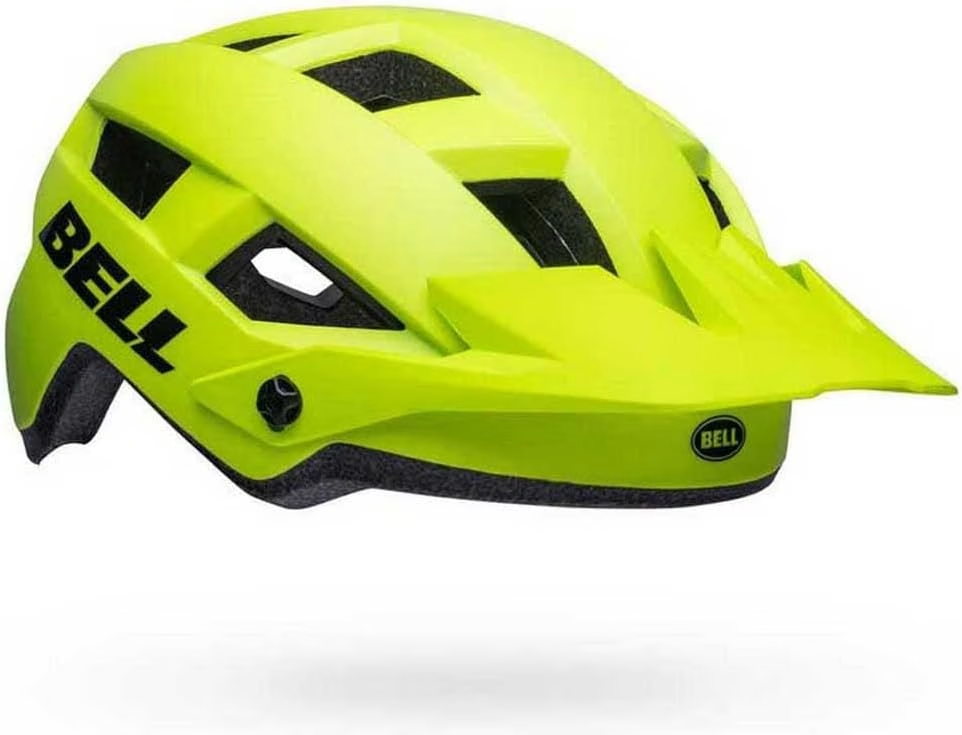
If your budget tops out around £30–35 and you want a reputable brand rather than a mystery import, the Bell Spark 2 is the honest answer. Bell have been making helmets since 1954 and their quality control is solid. The Spark 2 meets EN1078, uses a decent EPS liner, and the Float Fit retention system is surprisingly comfortable and adjustable.
No MIPS at this price — that’s the honest trade-off. But compared to the unbranded budget helmets flooding Amazon, this is in a different league for build consistency and strap quality. For occasional leisure rides or a child’s first proper helmet, it does the job without pretending to be more than it is.
- Weight: ~300g (M)
- Vents: 14
- Protection: EN1078 (no MIPS)
- Retention: Float Fit dial
- Sizes: S / M / L
- Available: Amazon UK, Halfords, Evans Cycles
Mechanic’s Verdict: 7/10
A trustworthy budget helmet from a proper brand. You’re not getting rotational protection, but you are getting reliable manufacture and a fit system that works. Right choice at this price.
✅ Reputable brand (Bell since 1954)
✅ EN1078 certified
✅ Comfortable Float Fit system
✅ Lightweight at this price
✅ Good availability
❌ No MIPS or rotational protection
❌ Fewer vents than pricier options
3. Specialized Align II MIPS — Best for Commuters
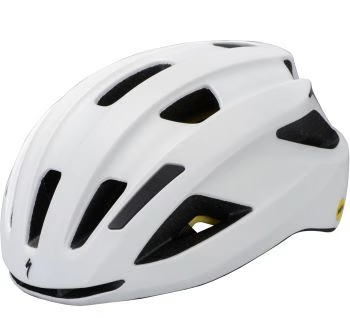
Specialized built the Align II to be the commuter helmet that doesn’t compromise. It has MIPS, 18 vents arranged for real airflow rather than aesthetics, and their Mindset II retention system that adjusts both the circumference and the height of the cradle — important if you have a longer head shape. The 4th Dimension Cooling channels draw air through the helmet even at lower speeds, which matters in stop-start city riding.
What I like from a workshop perspective: it’s compatible with Specialized’s Angi crash sensor (sold separately), which sends a push notification to an emergency contact if it detects a crash. For solo commuters, that’s a genuinely useful feature. The build quality matches the Giro at a slightly higher price; which one you prefer often comes down to head shape.
- Weight: ~280g (M/L)
- Vents: 18
- Protection: MIPS + EN1078
- Retention: Mindset II (height + circumference adjust)
- Angi compatible: Yes
- Available: Specialized dealers, Amazon UK, Wiggle
Mechanic’s Verdict: 8.5/10
The commuter’s helmet. MIPS, intelligent ventilation, height-adjustable retention, and crash sensor compatibility. Worth the extra £10 over the Giro if you’re riding daily in traffic.
✅ MIPS rotational protection
✅ Height-adjusting retention cradle
✅ 4th Dimension Cooling works at low speed
✅ Angi crash sensor compatible
✅ Lighter than most at this price
❌ Specialized-only ecosystem for Angi
❌ Slightly fewer vents than the Giro
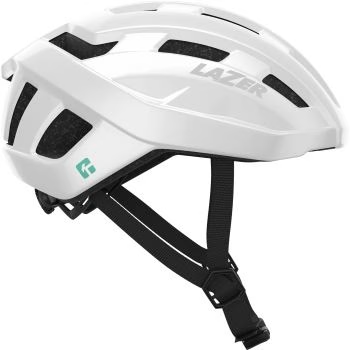
4. Lazer Tempo KinetiCore — Best Road Helmet
Lazer are a Belgian brand with over a century of helmet making behind them, and the Tempo KinetiCore is their answer to MIPS — but without the separate liner. KinetiCore uses crumple columns integrated directly into the EPS foam that compress under angled impact to absorb rotational energy. No separate plastic layer, which means lighter weight and no internal movement that some riders find uncomfortable.
The Tempo has 22 vents, a solid dial retention system, and a clean road profile. At around £80 it sits in the performance sweet spot where you’re getting proper rotational protection and a noticeably lighter lid than the budget options. We regularly stock these and see the odd crash-tested example — the KinetiCore crumple system works exactly as advertised.
- Weight: ~250g (M)
- Vents: 22
- Protection: KinetiCore + EN1078
- Retention: Lazer Advanced Rollsys
- Sizes: S / M / L / XL
- Available: Halfords, Amazon UK — see our current Halfords deal
Mechanic’s Verdict: 9/10
The best road helmet in this guide. KinetiCore is genuinely clever — integrated rotational protection with no extra liner weight. Belgian build quality shows. Strong pick for road cyclists who want more than MIPS without paying £150+.
✅ KinetiCore — no liner, lighter result
✅ 22 vents with excellent through-flow
✅ 250g — noticeably light to wear
✅ Rollsys retention is quick and precise
✅ Long heritage brand — not a flash-in-pan
❌ No visor option for MTB use
❌ Slightly premium price vs the Giro
5. Fox Speedframe MIPS — Best MTB Helmet
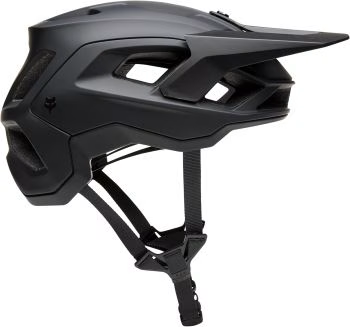
If you’re on trails rather than tarmac, you need a different helmet shape — more rear-head coverage, a sun visor, and usually goggle compatibility. The Fox Speedframe MIPS is the mountain helmet I’d recommend at the sub-£100 mark. It has MIPS, 16 vents positioned for trail riding airflow, a fully adjustable visor, and the Boa L dial retention system that you can operate with one hand mid-ride.
The extended rear coverage matters on mountain bikes where you’re more likely to come off backwards or sideways. It’s goggle-compatible, which road helmets often aren’t. Fox make it from a tough polycarbonate shell that’ll handle the odd tree-branch clip better than a weight-optimised road lid. For trail centres, green lanes, and mountain biking in general — this is the pick under £100.
- Weight: ~400g (M)
- Vents: 16
- Protection: MIPS + EN1078 + ASTM F1952
- Retention: Boa L dial + occipital adjustment
- Visor: Fully adjustable, tool-free
- Goggle compatible: Yes
- Available: Amazon UK, Wiggle, Chain Reaction Cycles
Mechanic’s Verdict: 8.5/10
The trail helmet in this list. MIPS, Boa dial you can adjust on the fly, proper rear coverage, and goggle compatibility. Everything you need for off-road riding at a fair price.
✅ MIPS rotational protection
✅ ASTM F1952 MTB-specific standard
✅ Boa dial — one-handed adjustment
✅ Extended rear coverage
✅ Goggle-compatible
❌ Heavier than road lids (by design)
❌ Overkill for road/commute use
Quick Comparison: Which Helmet Is Right for You?
At a glance — all five picks:
- Giro Register MIPS (~£55) — Best all-rounder. MIPS, 25 vents, fits most heads. Buy this if you’re unsure.
- Bell Spark 2 (~£32) — Best budget. No MIPS but a proper brand. Right for casual and leisure riders.
- Specialized Align II MIPS (~£65) — Best commuter. MIPS, height-adjusting cradle, crash sensor ready. Daily riders in traffic.
- Lazer Tempo KinetiCore (~£80) — Best road. Lightest pick, KinetiCore integrated protection, Belgian quality. Road cyclists wanting to upgrade.
- Fox Speedframe MIPS (~£90) — Best MTB. Trail-specific coverage, goggle-compatible, Boa dial. Off-road riders only.
Frequently Asked Questions
Best Bike Helmets UK 2026 Final Verdict –
Honest advice is simple: spend at least £50 and make sure it has MIPS or KinetiCore. The Giro Register MIPS is the helmet I recommend to most people — it covers road, commute, and leisure riding with proper rotational protection at a fair price. If you’re on a tighter budget the Bell Spark 2 is a trustworthy choice from a proper brand. Road cyclists wanting to step up should look at the Lazer Tempo KinetiCore, and trail riders need the Fox Speedframe MIPS.
Whatever you choose: fit it properly, replace it after any crash, and wear it every time. The helmet you leave at home protects nobody.
Related Articles & News!
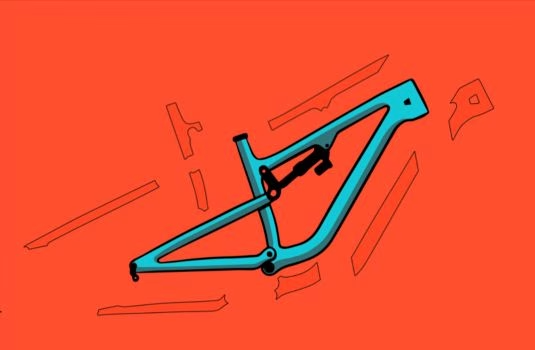
Discover the best bike frame protection UK 2026 - from RideWrap's new UK production to InvisiFRAME tailored kits. Expert reviews, installation guides, and budget options to keep your bike pristine and maximize resale value. 30 years professional experience.
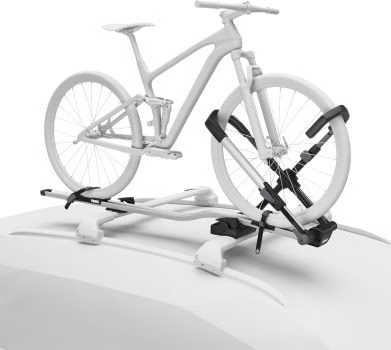
Can't fit your bikes inside? Scratched paintwork from poorly secured bikes? Boot access blocked mid-journey? Finding the best bike racks for cars UK cyclists need isn't just [...]

Brake pads are brake pads, right? Wrong. After 30 years fixing bikes in Bournemouth, I've fitted hundreds of pad sets from budget to boutique. Gorilla Brake Pads [...]

Punctures. The curse of every cyclist. After 30 years fixing bikes in Bournemouth, we've fitted thousands of inner tubes and seen the technology transform completely. Find the [...]