
Best Bike Tyres UK 2026: Road, MTB, Gravel & Commuter — Expert Picks
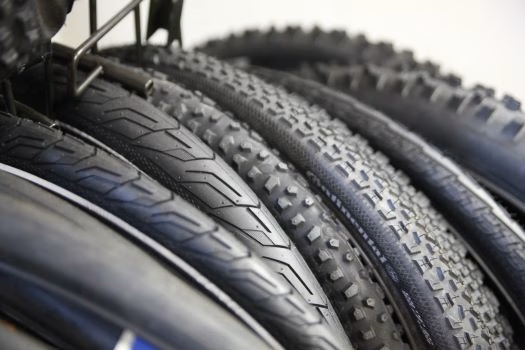
The wrong tyre can ruin a ride. The right one transforms it. After 30 years fixing bikes in my Bournemouth workshop, I’ve seen more tyre-related problems than I care to count — pinch flats from chronically underinflated tyres, sidewall blowouts from cheap casings, performance riders running touring rubber, and commuters who’ve replaced three inner tubes in a month when one tyre change would have solved everything. These are the best bike tyres UK cyclists can buy in 2026, chosen by a mechanic who sees what fails and what lasts.
The best bike tyres UK market covers everything from sub-£20 commuter workhorses to £55-per-tyre race rubber. Whether you’re chasing Strava segments on Sunday, grinding the Dorset bridleways, or just trying to get to work without a puncture, tyre choice matters more than most cyclists realise. The right tyre saves you weight, watts, and the misery of fixing a flat in the rain. Pair these with the right inner tube and you’ll have a setup that genuinely performs. Here’s what I’d actually fit.
Our Top Picks — Best Bike Tyres UK 2026
- Best Road Tyre: Continental Grand Prix 5000 S TR — the benchmark, tubeless-ready (£45–55)
- Best All-Weather Road: Pirelli P Zero Race 4S — brilliant wet grip, pro-team compound (£40–50)
- Best MTB Trail Combo: Maxxis Minion DHF + Ardent — the trail gold standard (£35–45 each)
- Best Gravel: Pirelli Cinturato Gravel M — road to gravel to trail (£40–50)
- Best Puncture Proof: Schwalbe Marathon Plus — workshop standard, near-indestructible (£30–40)
Table Of Contents
Why Tyre Choice Matters More Than Most Riders Think
- Tyres are your only contact with the road — every watt of power, every braking input, every corner goes through two small patches of rubber. No other upgrade has more real-world impact.
- Rolling resistance is massive — a quality road tyre can save you 10–20 watts at 25km/h vs a cheap tyre. That’s equivalent to a significant weight saving.
- Puncture protection matters in the UK — glass, flint, and wet roads make punctures more likely here than almost anywhere in Europe. The right tyre massively reduces frequency.
- Width myths busted — a 28c tyre at correct pressure rolls faster than a 25c on UK roads. Comfort, grip, and speed all improve with appropriate width. Wider is not slower.
- Compound changes everything — the rubber formulation affects grip in wet and dry, rolling resistance, and how fast the tyre wears. This is where the price difference goes.
ROAD
Slick or Near-Slick
– 23c–32c width
– Smooth tread, low resistance
– Supple high-TPI casing
– Tubeless option for race use
MTB
Knobbly Tread
– 2.0″–2.6″ width
– Aggressive side knobs for cornering
– Different front/rear patterns
– Tubeless common at trail level
GRAVEL
Mixed Tread
– 35c–50c width
– Semi-slick centre, grip on edges
– Handles tarmac and trails
– Tubeless strongly recommended
COMMUTER
Puncture-Resistant
– 28c–47c width
– Reinforced belt under tread
– Reflective option for visibility
– Reliability over weight/speed
Best Road Bike Tyres UK 2026
Road tyres split into two camps: pure performance rubber for those chasing speed and comfort, and all-weather compounds for UK riders who need wet grip nine months of the year. The picks below cover both. All use modern casing technology — if you’re still running tyres with under 60 TPI, you’re leaving watts on the road.
Continental Grand Prix 5000 S TR
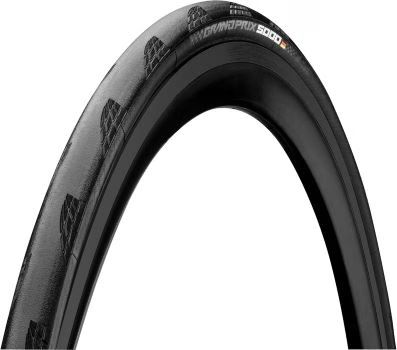
Best Overall Road Tyre
The benchmark by which every other road tyre is judged. BlackChilli compound delivers exceptional grip in wet and dry, while the supple 120 TPI casing returns energy efficiently on every pedal stroke. Tubeless-ready — run it without a tube to eliminate pinch flats and drop pressure for better grip and comfort. Available in 25c, 28c, and 32c. I’ve had customers run these for 5,000+ miles on UK roads without a puncture. Worth every penny.
Width: 25c / 28c / 32c
TPI: 120 (supple race casing)
Protection: BlackChilli compound + Vectran breaker
Weight: ~265g (28c)
Price: £45–£55
Pirelli P Zero Race 4S
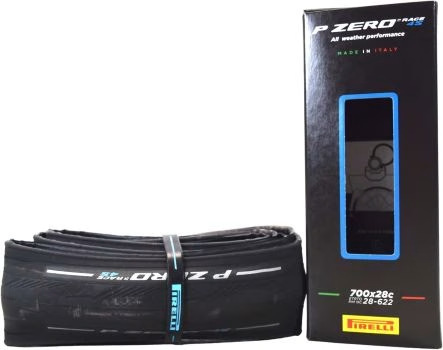
Best All-Weather Road Tyre
Pirelli’s four-season compound is the most sensible road tyre for UK riders who can’t be precious about conditions. The aramid-reinforced casing resists punctures better than pure race rubber, and the 4-season compound maintains grip down to 7°C — where single-compound tyres start sliding. Used by several UCI WorldTour teams in wet classics. If you only ride on dry summer days, get the GP5000. If you ride all year in the UK, get these.
Width: 26c / 28c
TPI: 127 (SmartEVO casing)
Protection: 4-season compound + Aramid breaker
Weight: ~255g (28c)
Price: £40–£50
Vittoria Corsa G2.0
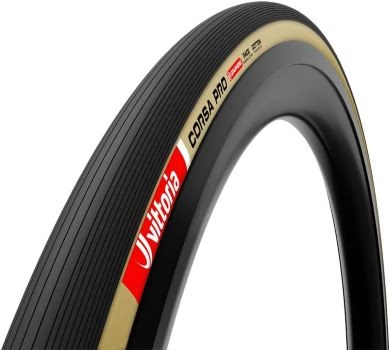
Best Value Performance Road Tyre
Vittoria’s graphene compound punches well above the GP5000’s price point for grip and comfort. The G2.0 is the tyre I see most on UK club riders’ bikes — it’s the realistic alternative when you want race-grade performance without spending over £50 per tyre. Graphene-reinforced rubber provides consistent rolling resistance and impressive puncture resistance for a tyre this light. Used widely on UK sportives. A legitimate GP5000 rival.
Width: 25c / 28c
TPI: 320 (corespun graphene casing)
Protection: Graphene 2.0 compound
Weight: ~250g (25c)
Price: £40–£85
Best MTB Tyres UK 2026
MTB tyre choice is more position- and terrain-specific than any other category. The right front tyre (grip priority) is different from the right rear tyre (rolling speed). UK trail centres — Chicksands, Glentress, Cwmcarn — demand wet-weather grip more than heat resistance. The picks below cover trail, enduro, and all-round use across the varied conditions UK riders actually face.
Maxxis Minion DHF (Front) + Ardent (Rear)
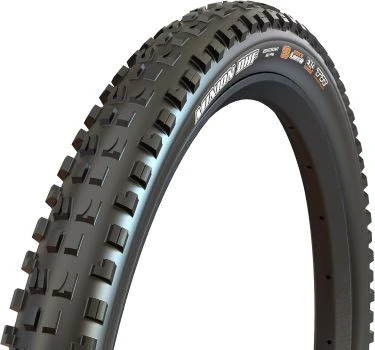
Best Trail MTB Tyre Combo
The most popular MTB tyre pairing in the UK for a reason — it works. The Minion DHF on the front delivers aggressive cornering grip on loose and wet terrain (the big side knobs are brilliant in UK mud), while the Ardent on the rear balances rolling speed with enough traction for most conditions. This is the combo I see on the bikes of riders who actually know what they’re doing. In 2.35″ it’s the trail sweet spot; step to 2.5″ for enduro.
Front: Minion DHF — 2.35″ / 2.5″ / 2.6″
Rear: Ardent — 2.25″ / 2.35″
Compound: MaxxTerra / EXO+ (recommended)
Weight: DHF ~770g, Ardent ~730g (2.35″)
Price: £35–£45 each
Schwalbe Nobby Nic
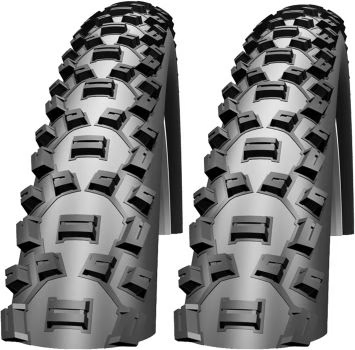
Best All-Round MTB Tyre
The Nobby Nic is the MTB tyre for riders who want one tyre that works anywhere — front or rear, hardtail or full-sus, dry trails or wet forest singletrack. The tread pattern transitions smoothly between hard-pack and loose terrain, and the SnakeSkin sidewall option provides meaningful puncture protection without killing rolling speed. Works particularly well on the mixed-surface riding typical across the South of England — chalk, clay, compressed dirt.
Width: 2.25″ / 2.35″ / 2.6″
Compound: ADDIX Speed or Speedgrip
Protection: SnakeSkin sidewall option
Weight: ~680g (2.35″ SnakeSkin)
Price: £35–£45
Continental Kryptotal
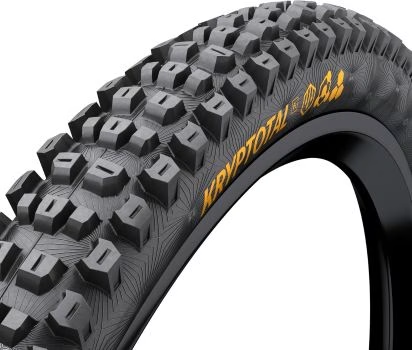
Best for UK Wet Conditions
Continental’s newest trail tyre, specifically designed for the kind of wet, loamy conditions that UK trail centres serve up from October to April. The Apex compound performs well at low temperatures — where many competitor compounds go greasy — and the tread spacing clears mud effectively rather than clogging. Early feedback from UK riders at Afan and Glentress has been excellent. If you ride predominantly in wet British conditions, these are worth the premium.
Width: 2.4″ / 2.6″ (front) / 2.35″ / 2.4″ (rear)
Compound: Apex (wet-optimised)
Protection: ProTection casing
Weight: ~700g (2.4″ front)
Price: £40–£50
Best Gravel Bike Tyres UK 2026
Gravel tyres have to do something genuinely difficult: roll efficiently on road, grip on loose gravel, and handle the occasional stretch of compressed mud — all in the same ride. The picks below all manage this balance well for UK conditions. Run them tubeless wherever possible: gravel terrain is harsh on sidewalls and sealant fixes minor punctures before you even notice them.
Pirelli Cinturato Gravel M
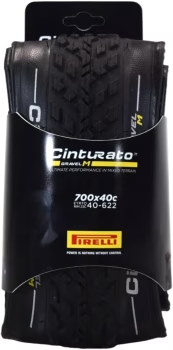
Best Mixed-Terrain Gravel Tyre
Pirelli’s Cinturato Gravel M is the tyre I’d choose for a typical UK gravel ride — 40% road, 60% gravel tracks and bridleways. The SpeedGRIP compound gives confidence on steep loose descents while the centre tread is efficient enough on tarmac that you’re not constantly fighting rolling resistance. The “M” variant (medium tread) is the all-rounder; if you ride more mud, go for the “H” (heavy) variant. Available in 40mm and 45mm — go wider if your frame allows it.
Width: 40mm / 45mm
Compound: SpeedGRIP
Casing: TechWALL+ (tubeless-ready)
Weight: ~420g (40mm)
Price: £40–£50
Schwalbe G-One Allround
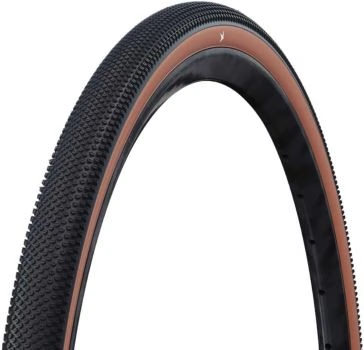
Best Versatile Gravel Tyre
The G-One Allround is Schwalbe’s answer to riders who want one tyre that genuinely covers road and light gravel without compromise. The TechStar tread pattern — diamond-shaped centre blocks — rolls fast on tarmac while the side knobs provide meaningful grip when the surface loosens. MicroSkin sidewall protection adds cut resistance for gravel paths without adding significant weight. Works well as a light gravel/road crossover tyre for riders who commute on road and explore bridleways at weekends.
Width: 38mm / 40mm / 45mm
Compound: ADDIX (dry) or ADDIX Speedgrip (wet)
Protection: MicroSkin sidewalls
Weight: ~390g (40mm)
Price: £35–£45
WTB Riddler
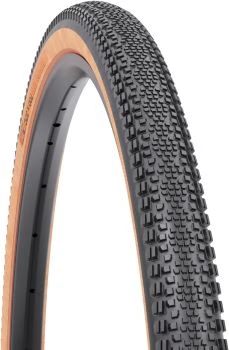
Best Value UK Gravel Tyre
American brand WTB makes excellent gravel tyres that often fly under the radar in the UK — but the Riddler has become a favourite among gravel riders exploring Dorset, the South Downs Way, and the Wolds. The open tread pattern clears mud efficiently on UK bridleways while rolling acceptably on tarmac. In 37c it’s a fast-rolling light gravel tyre; in 45c it handles more technical terrain. Slash Guard protection resists punctures well for the price. Strong competition for more expensive European tyres.
Width: 37c / 45c
Compound: SG2 rubber
Protection: Slash Guard anti-puncture
Weight: ~400g (37c)
Price: £30–£40
Best Commuter & Puncture-Resistant Bike Tyres UK 2026
Commuter tyres have a different brief to race rubber: they need to be reliable, long-lasting, and as close to puncture-proof as technology allows. You want to arrive at work, not fix a flat in the rain. The tyres below all feature dedicated puncture-protection belts under the tread — a reinforced layer that stops glass, flint, and thorns before they reach the inner tube. Pair with a quality inner tube and your flat tyres should become a distant memory.
Schwalbe Marathon Plus
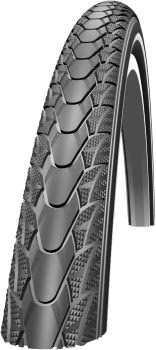
Best Anti-Puncture Commuter Tyre
The Marathon Plus is the workshop standard for puncture prevention — and I mean that literally. When a commuter comes in asking what tyre to fit so they stop getting flats, these are what I put on. The SmartGuard layer is 5mm of reinforced rubber under the tread — I’ve had cycle couriers run 10,000 miles in Bournemouth on these without a single puncture. They’re heavier than race tyres and they don’t roll as fast, but for riders who need absolute reliability, nothing touches them. Wide availability: 28mm to 47mm covers everything from road bikes to hybrids.
Width: 28mm / 32mm / 38mm / 40mm / 42mm / 47mm
Protection: SmartGuard 5mm belt
Weight: ~680g (35mm)
Price: £30–£40
Continental Contact Plus
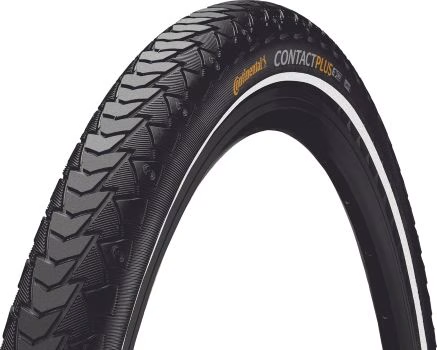
Best Road Commuter Tyre
The Contact Plus threads the needle between puncture protection and rolling speed better than most commuter tyres. The SafetyPlusBelt provides real puncture resistance while the compound rolls noticeably faster than the Marathon Plus — a meaningful difference if your commute involves any kind of hills. The reflective sidewall strip makes you genuinely more visible in winter darkness, which is a practical benefit that doesn’t show up in spec sheets. A sensible choice for road-focused commuters who want protection without sacrificing all performance.
Width: 28mm / 32mm / 37mm / 42mm
Protection: SafetyPlusBelt
Feature: Reflective sidewall strip
Weight: ~560g (32mm)
Price: £25–£35
Michelin Protek Max
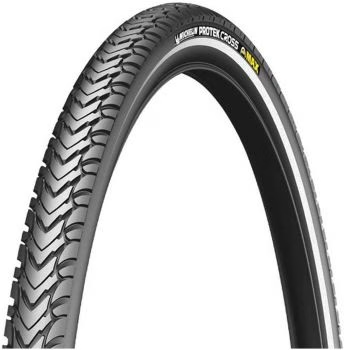
Best Budget Commuter Tyre
Michelin’s budget commuter option is significantly better than unbranded supermarket tyres at a similar price. MaxProtection technology provides reasonable flat resistance without the weight and cost of a full puncture-proof belt. For occasional cyclists, weekend riders, or those on tight budgets who just want something that works and doesn’t puncture every other week, the Protek Max does the job. Available in a wide range of widths including 47mm for hybrid and utility bikes. Not the best tyre here — but comfortably the best at this price.
Width: 32mm / 37mm / 40mm / 47mm
Protection: MaxProtection belt
Weight: ~580g (40mm)
Price: £20–£30
Bike Tyre Buying Guide: How to Choose the Right Tyre
How to Read a Tyre Size
Tyre sizes confuse a lot of cyclists because road and MTB use different systems. Here’s how to decode them:
Road/hybrid (ETRTO / ISO): Written as 700×28c or 28-622. The first number is width in millimetres; the second is the bead seat diameter. 622mm (700c) is standard road/hybrid; 559mm (26″) is older MTB; 584mm (27.5″) and 622mm (29″) are modern MTB.
MTB: Written as 29×2.35 or 2.35-622. The first number is wheel diameter in inches; the second is tyre width in inches. A 29er and a 700c road bike share the same 622mm rim diameter — they’re the same wheel size, different tyre widths.
Practical rule: Check your rim’s maximum tyre width (stamped on the rim or in the spec sheet). Stay within 10mm of that maximum for best performance.
Wider Isn’t Slower — The Width Myth
One of the most persistent myths in cycling is that narrower tyres roll faster. This was true on velodrome surfaces but is demonstrably false on UK roads. At the same pressure, a 28c tyre on a road bike produces less rolling resistance than a 25c because it deforms less under load — the contact patch is shorter and rounder rather than long and flat. You get better comfort and lower rolling resistance simultaneously. For most UK road riders, 28c is the optimal width. Hybrids should be at minimum 32mm; wider on rough roads.
Clincher vs Tubeless vs Tubular
Clincher (most common): The tyre hooks onto the rim with a bead, with an inner tube inside. Standard on most bikes. Easy to repair roadside. Most tyres in this guide are clincher.
Tubeless: No inner tube — the tyre seals directly to the rim with liquid sealant inside. Benefits: no pinch flats, can run lower pressures for better grip and comfort, sealant self-repairs small punctures while riding. Requires tubeless-compatible rims and tyres, plus sealant. Increasingly the norm for MTB and gravel; growing on road.
Tubular: The tube is sewn inside the tyre casing and the whole assembly glues to the rim. Used in professional road racing. Not practical for most cyclists — difficult to repair, expensive rims. Ignore unless you’re racing.
My recommendation: Clincher for most road and commuting use. Tubeless for MTB, gravel, and performance road riding if your wheels support it. Pair with the right inner tube for clincher setups.
TPI — Why Casing Quality Matters
TPI stands for threads per inch — a measure of how finely woven the tyre casing is. Higher TPI means more threads packed into the same space, which produces a thinner, lighter, more supple casing that conforms to road surface irregularities better.
– Under 60 TPI: Budget/entry-level. Stiffer, heavier, higher rolling resistance. Fine for utility use.
– 60–120 TPI: Mid-range. Good balance of durability and ride quality.
– 120+ TPI: Performance. Supple, light, fast-rolling. The GP5000 S TR is 120 TPI; the Vittoria Corsa runs 320 TPI casing.
For commuting tyres, 60 TPI is fine — puncture protection matters more than casing suppleness. For performance road use, don’t accept anything under 120 TPI.
Compound and Tread: Match to Conditions
Rubber compound affects grip in different temperatures and conditions:
– Single compound: One rubber formula throughout the tread. Simple, consistent, often used in budget tyres.
– Dual compound: Harder centre strip (lower rolling resistance) with softer edge compound (better cornering grip). Common in mid-range road tyres.
– Four-season compound: Formulated to maintain grip at lower temperatures. Essential for year-round UK road riding — standard summer compounds lose grip below ~10°C.
For MTB tread patterns: more aggressive side knobs = more cornering grip at the cost of rolling speed. Match to the terrain you actually ride, not the most aggressive terrain you might ride once a year.
What I See Fail in the Workshop
The most common tyre-related problems I fix in Bournemouth:
- Chronic underinflation: The number one cause of pinch flats and sidewall damage. Most cyclists run 10–20 PSI below the correct pressure. Get a floor pump with a gauge and use it.
- Wrong compound for conditions: Summer road compound tyres in December on wet roads. The grip loss is significant. If you ride all year, use a four-season compound.
- Ignoring tyre direction: Most performance tyres have a directional arrow. Fitting them backwards isn’t just wrong — it actively reduces braking grip. Always check before fitting.
- Mixing worn and new tyres: One new tyre on the front, worn tyre on the back. The worn tyre will puncture more frequently and the grip difference creates unpredictable handling. Replace as pairs when possible.
- Running too-narrow tyres: Riders buying 23c tyres for comfort on UK roads, then complaining about harsh ride and frequent punctures. Go to 28c minimum on UK road surfaces.
When to Replace a Bike Tyre
Replace your tyres when you see:
- Cracking on the sidewall — the rubber is degrading and the casing is weakening. A blowout waiting to happen.
- Visible wear indicators gone — most tyres have small dimples or wear strips in the tread; when they disappear, the tyre is done.
- Flat tread centre — road tyres should be round in cross-section. A flat centre means the tread is worn and rolling resistance has increased.
- Frequent punctures from the same spot — a tyre with many small embedded shards in the tread will keep puncturing regardless of tube quality. Time to replace.
- Cuts and slashes — deep cuts exposing the casing or inner breaker layer are a tyre failure risk. Fit a new tyre.
Bike Tyre Comparison — All Picks at a Glance
| Tyre | Type | Width | Protection | Weight | Price | Best For |
|---|---|---|---|---|---|---|
| Continental GP5000 S TR | Road | 25–32c | BlackChilli | ~265g | £45–55 | Performance road |
| Pirelli P Zero Race 4S | Road | 26–28c | 4-season | ~255g | £40–50 | Wet road / all-year |
| Vittoria Corsa G2.0 | Road | 25–28c | Graphene | ~250g | £35–45 | Value performance |
| Maxxis Minion DHF | MTB Front | 2.35–2.6″ | MaxxTerra | ~770g | £35–45 | Trail / enduro front |
| Schwalbe Nobby Nic | MTB | 2.25–2.6″ | SnakeSkin | ~680g | £35–45 | All-round trail |
| Continental Kryptotal | MTB | 2.35–2.6″ | Apex | ~700g | £40–50 | UK wet conditions |
| Pirelli Cinturato Gravel M | Gravel | 40–45mm | TechWALL+ | ~420g | £40–50 | Mixed terrain |
| Schwalbe G-One Allround | Gravel | 38–45mm | MicroSkin | ~390g | £35–45 | Tarmac + gravel |
| WTB Riddler | Gravel | 37–45c | Slash Guard | ~400g | £30–40 | Budget gravel |
| Schwalbe Marathon Plus | Commuter | 28–47mm | SmartGuard | ~680g | £30–40 | Max puncture protection |
| Continental Contact Plus | Commuter | 28–42mm | SafetyPlusBelt | ~560g | £25–35 | Fast commuter |
| Michelin Protek Max | Commuter | 32–47mm | MaxProtection | ~580g | £20–30 | Budget commuter |
Frequently Asked Questions — Bike Tyres UK
Final Verdict: Which Bike Tyre Should You Buy?
The tyre landscape in 2026 is better value than it’s ever been. Race-grade technology has trickled down to mid-range price points, and the gap between budget and premium has narrowed considerably. Here’s the bottom line from the workshop bench:
For Road Cyclists Who Want the Best
Continental Grand Prix 5000 S TR (£45–55) is the answer. Run it tubeless if your wheels allow; clincher if not. At 28c it’s faster and more comfortable than 25c on UK roads — ignore anyone who tells you otherwise. This is the tyre I’d fit on my own road bike.
For Year-Round UK Road Riders
Pirelli P Zero Race 4S (£40–50) is the sensible choice if you can’t be precious about conditions. You won’t notice the performance difference vs the GP5000 on wet November mornings. You will notice the better grip.
For Trail MTB Riders
The Maxxis Minion DHF + Ardent combo (£35–45 each) remains the benchmark. If you want one tyre front and rear, the Schwalbe Nobby Nic is genuinely excellent on UK mixed terrain. Don’t overthink it — run them tubeless.
For Gravel Riders
Pirelli Cinturato Gravel M (£40–50) handles everything you’ll encounter on UK gravel routes. If you want something at a lower price point that still performs well, the WTB Riddler at £30–40 is an honest recommendation.
For Commuters Who’ve Had Enough of Punctures
Schwalbe Marathon Plus (£30–40) is the answer, full stop. They’re heavier than race tyres and they don’t roll as fast — I don’t care. If punctures are disrupting your commute, these fix the problem. Pair them with a quality butyl inner tube and you’re done.
Don’t Forget Pairing Your Tyres With the Right Tubes
Even the best tyre is undermined by the wrong inner tube. Wrong size, wrong valve, wrong material for the use case. Our full guide to the best bike inner tubes UK covers everything you need to know — it’s the natural companion to this guide.
Tyre Fitting & Bike Repairs — Bournemouth, Poole & Dorset
Need a tyre fitting, puncture repair, or full bike service?
Bike Repairs Direct — home workshop near BH11, Bournemouth
Free collection & delivery within 12 miles · 104 five-star Google reviews
Bike repairs Bournemouth · Est. 1994
Related Articles & News!

Continental Grand Prix 5000 Road Bike Tyres - Allrounder Clincher Bicycle Tyre | Versatile Road and Track Cycle Tyre [...]